24/7 Emergency Service · Flower Mound, TX
Water Damage Restoration in Flower Mound, TX
Need water damage restoration in Flower Mound, TX? Our IICRC-certified crews answer 24/7, pull out the water, dry your home with commercial equipment, and handle the repairs. We document every step so your insurance claim goes smoother.
- Crew on site in about 60 minutes
- IICRC-certified techs
- Works with all insurers
- Free estimates
Water damage restoration Flower Mound TX: what to do first
Shut off the water at the main valve, usually in a box near the curb or where the line enters the garage. Turn off breakers for any wet rooms if you can reach the panel without standing in water. Then call (940) 274-9880. We aim to have a crew at your door in about 60 minutes across most of town.
When we arrive, we trace the water with moisture meters and a thermal camera, extract what is standing, and set up air movers and LGR dehumidifiers. A typical house dries in 3 to 5 days. You get daily readings and photos your adjuster can check.
Flower Mound is a town of about 76,000 people spread across 44 square miles in southern Denton County, with a sliver in Tarrant County. Grapevine Lake forms its southern edge and Lewisville sits to the east. Our Denton crews run down to Flower Mound every day.
Local risk
Why water damage happens in Flower Mound
Big 1990s houses, two lakes, and a string of creeks create a pattern we see over and over.
A town built mostly in the 1990s
The median home here dates to 1997, and about 40% of houses went up between 1990 and 1999. Original water heaters, supply lines, and shower pans in those homes are now 25 to 35 years old, which is when many start to fail.
Large two-story floor plans
Around 86% of homes are single-family detached houses, and many have a second floor over the living room or kitchen. An upstairs toilet or tub leak drops straight through the ceiling below, soaking drywall, insulation, and cabinets on the way down.
Creeks that feed two lakes
The town lists flood hazard areas along Timber Creek, Graham Branch, McKamy Creek, Wichita Creek, and several other branches. Some drain to Grapevine Lake and some to Lewisville Lake. Heavy spring storms can send runoff into garages and slab homes near these channels.
Freezes, hail, and clay soil
During the February 2021 winter storm, the town asked residents to cut water use while pipes froze across North Texas. Spring hail season and clay soil that shrinks and swells under slab foundations round out the local risk list.
Flower Mound at a glance
Town facts that shape a restoration job
We use these details to plan equipment, permits, and who to call.
Neighborhoods and nearby towns
Where we work in Flower Mound
Each part of town has its own mix of home ages and water risks.
● South side and the Grapevine Lake shore
Denton County · 75022, 75028
Homes and businesses near the lake, including the Lakeside Business District, sit close to creek outlets and Corps of Engineers land. Damp summer air slows drying, and low spots can collect runoff after a heavy storm.
● Central Flower Mound and Bridlewood
Denton County · 75022, 75028
Mostly large single-family homes from the town’s 1990s and 2000s growth, along Long Prairie Road and around Bridlewood Boulevard. Long supply runs, upstairs baths, and attic equipment put ceilings at risk when a line or drain pan fails.
● West side and Canyon Falls
Denton County · west Flower Mound
The fastest-growing part of town, including the Denton Creek District and Canyon Falls where Flower Mound meets Argyle and Northlake. Newer builds use PEX plumbing, and roofs and windows take the brunt of spring hail.
Nearby cities we also serve
Our trucks cover the whole south Denton County corridor. See local pages for Lewisville to the east, Argyle and Northlake to the northwest, Coppell to the southeast, and Corinth up the road toward Denton. We also take calls from Highland Village, Double Oak, and Bartonville, which border Flower Mound to the north.
Services
Restoration services in Flower Mound
Each service below has its own Flower Mound page with local details and answers.




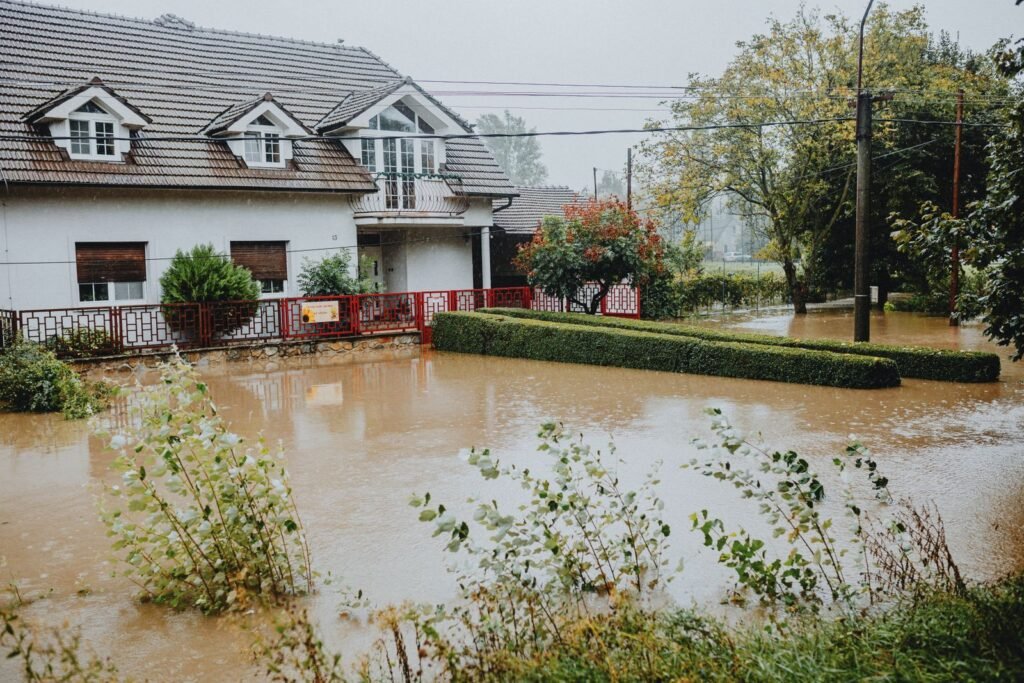

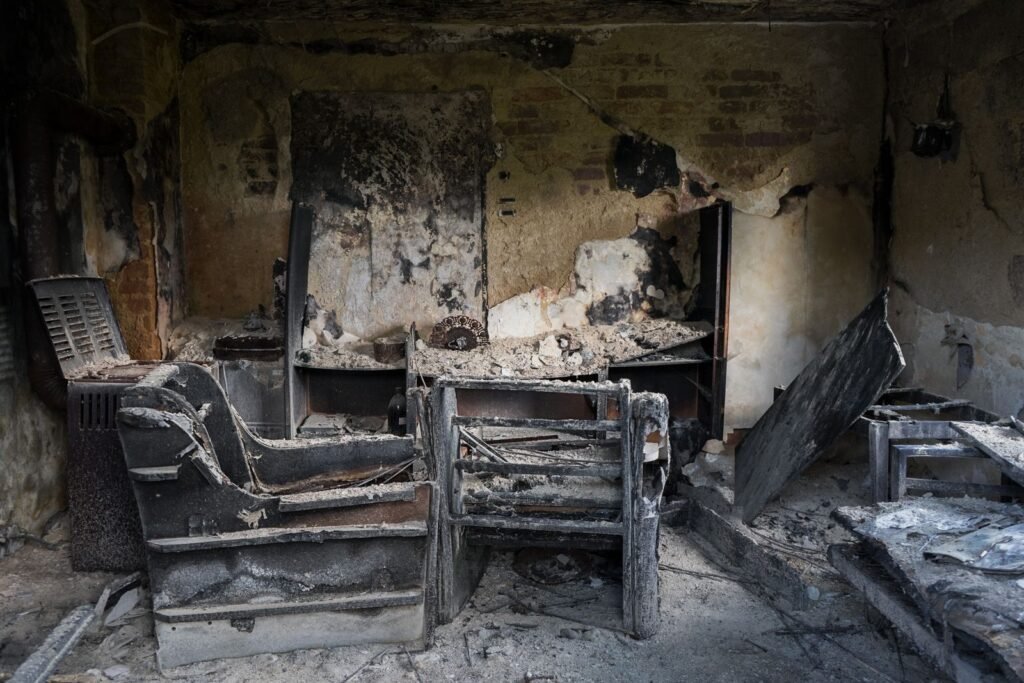

Housing age
How your build year changes the job
The decade a house was built tells us which pipes and appliances to check before we open a wall.
| Built | Share of Flower Mound homes | Typical plumbing | Where we look first |
|---|---|---|---|
| Before 1980 | About 5% | Galvanized steel or copper, cast iron drains | Corroded fittings and drain lines under the slab |
| 1980 to 1989 | About 15% | Copper, some polybutylene | Polybutylene fittings, water heaters, toilet supply lines |
| 1990 to 1999 | About 40% | Copper and CPVC | Shower pans, upstairs baths, washer boxes, slab leaks |
| 2000 to 2009 | About 19% | CPVC and early PEX | Ice maker lines, AC condensate pans, attic water heaters |
| 2010 and later | About 21% | PEX, tankless or attic water heaters | PEX fittings, roof flashing, window leaks after hail |
Shares are rounded from American Community Survey housing data for Flower Mound. Remodels can change what is behind your walls.
Our process
How we restore a Flower Mound home
Answer and dispatch
A live dispatcher picks up, helps you find the shutoff, and sends the nearest crew with extraction gear on board.
Find the water
Meters and thermal imaging show how far it spread. We classify it as Category 1, 2, or 3 and plan the drying.
Pull it out
Truck-mount and portable extractors remove standing water. Wet pad, baseboards, and drywall that cannot be saved come out.
Dry to standard
LGR dehumidifiers and air movers run while we log moisture each day until materials hit their dry goal.
Put it back
Our rebuild team replaces drywall, paint, trim, cabinets, and flooring, so one company sees the job through.
24/7 Emergency Line
Water coming through a ceiling in Flower Mound?
Call (940) 274-9880. Our dispatcher answers 24/7 and sends a crew right away.
Flood risk
Grapevine Lake, the creeks, and flood insurance
Grapevine Lake is a U.S. Army Corps of Engineers reservoir finished in 1952 and fed by Denton Creek. It exists mainly for flood control and water supply. That means its level swings. In May 2015, the lake rose more than 26 feet and peaked at 561.55 feet on May 31, well above its normal 535 feet. Twin Coves Park on the Flower Mound shore stayed closed until 2017.
The town lists flash floods, long rains, and Corps flood control releases at Lake Grapevine as its main flood hazards. It also warns that homes away from a creek can still sit in a flood hazard area or take on local drainage water.
Standard homeowners policies do not cover rising floodwater. That needs a separate NFIP or private flood policy. Check your address on the FEMA Flood Map Service Center, and see our Flower Mound flood water restoration page for cleanup steps.
Insurance
Filing a water damage claim in Flower Mound
What gets paid depends on your policy and the cause. A standard HO-3 policy usually covers sudden and accidental water, such as a burst supply line or a failed water heater. Slow leaks, rising floodwater, and sewer backup without an endorsement are usually excluded.
- Take photos before cleanup. Get the source, the standing water, and damaged belongings.
- Open a claim. Write down the claim number and ask what your deductible is.
- Keep damaged items. Adjusters often want to see flooring or furniture before it goes to the curb.
- Let us document the drying. Moisture maps, daily logs, and an itemized estimate back up every line.
We work with all carriers and can work directly with your insurance company. Before you call, the water damage cost calculator gives a rough range.

Emergency permits and repairs in Flower Mound
Water extraction and drying do not need a permit. Some of the repairs that follow do. Flower Mound Building Inspections offers emergency permits for water heater replacement, HVAC work, and plumbing repairs when an occupied home has no water. Applications can go in online any time and are usually reviewed the same business day.
The town also offers same-day emergency inspections if you call before 3:30 p.m. on a business day. That helps when a failed water heater or broken line has to be replaced before life gets back to normal. Your plumber or our rebuild team can handle the permit.
Want to read up first? Our guides on common causes of water damage in North Texas and storm season water risks apply to Flower Mound homes as well.
FAQ
Flower Mound water damage questions
How fast can your crew reach my Flower Mound home?
We aim to be on site in about 60 minutes for most Flower Mound addresses. Rush hour on FM 2499 or FM 1171 can add time, and the dispatcher will tell you a realistic window.
Do you serve every Flower Mound ZIP code?
Yes. We cover 75022 and 75028, including the small Tarrant County part of town and the Flower Mound side of Canyon Falls. We also serve neighboring Lewisville, Argyle, Northlake, and Coppell.
Water is coming through my first-floor ceiling. What should I do?
Shut off the water, turn off the breaker for that area, and move things out from under the wet spot. If the ceiling is sagging, stay clear of it. Poking a small hole to drain it can help, but only if you can do it safely.
Does Grapevine Lake flooding affect my homeowners claim?
Rising water from the lake or a creek is flood damage, which standard homeowners policies exclude. You need a flood policy for that. Water from a burst pipe or a failed appliance is a different claim and is often covered.
How long does water damage restoration take in a large two-story house?
Drying usually takes 3 to 5 days, even in bigger homes, because we add equipment to match the space. Repairs can take another few days to a few weeks, depending on how much has to be rebuilt.
My house was built in the 1990s. What fails most often?
Water heaters, toilet and sink supply lines, washer hoses, and shower pans are the usual culprits. Many are original and past their expected life. Replacing them before they fail is cheaper than drying a house.
Will you handle repairs after the drying is done?
Yes. Our team replaces drywall, paint, trim, cabinets, and flooring. You keep one contact from the first call to the final walkthrough.