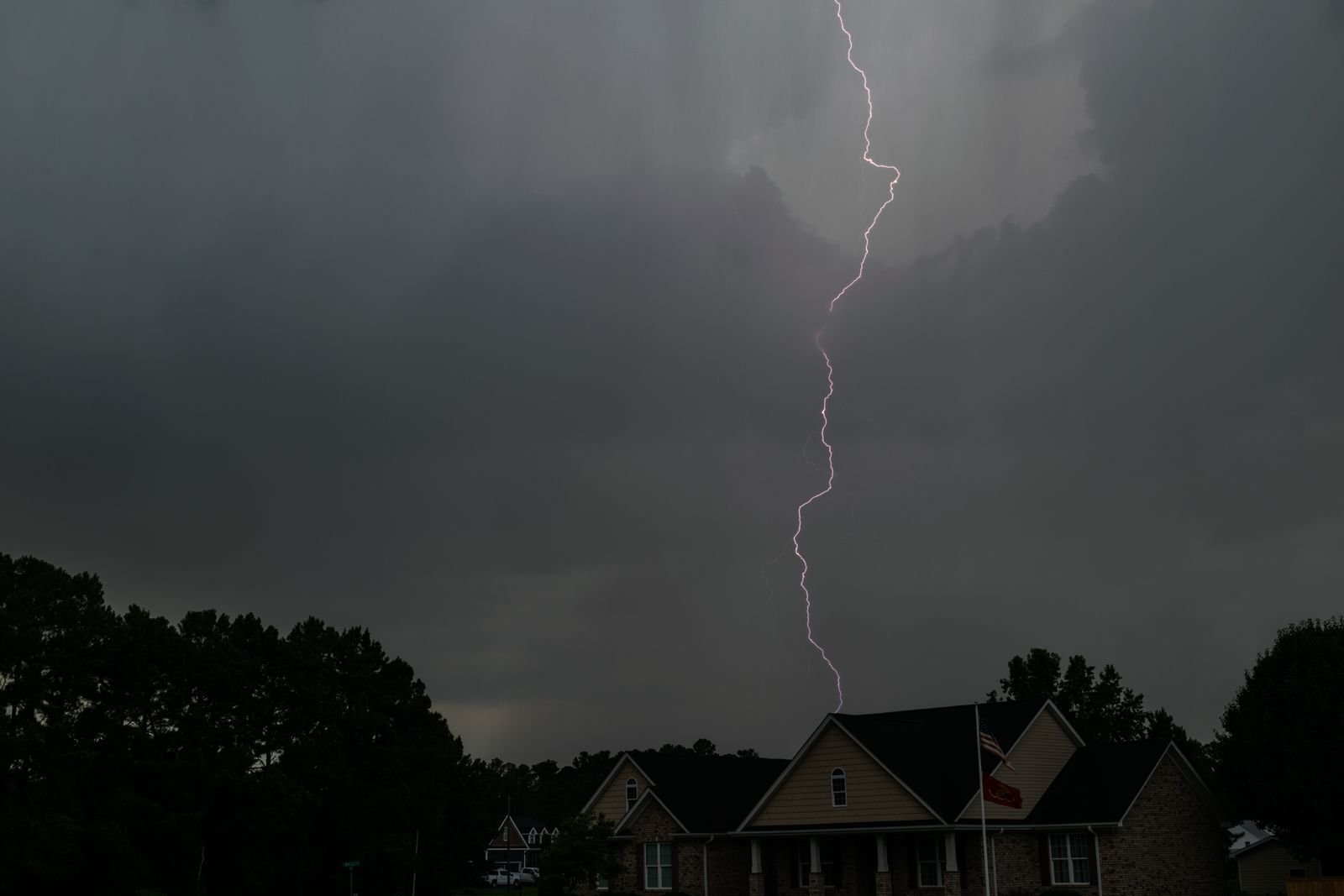
Hail, wind, and heavy rain · Denton County
Storm Damage Restoration in Denton, TX
Storm damage restoration in Denton TX starts with closing the building up: tarping the roof and boarding broken windows so the next rain does not add to the loss. Then we dry the attic, ceilings, and walls, document the damage for your claim, and repair the inside of the home.
- Emergency tarping and board-up
- Attic and ceiling drying
- Photo documentation for claims
- 24/7 dispatch
What storm damage restoration includes
After a North Texas storm, the roof is usually the first thing people think of. But the costly part of storm damage is often inside: wet attic insulation, stained and sagging ceilings, soaked wall cavities, and water that came in around windows and doors. Left alone for a few days, that becomes a mold problem.
Our storm damage restoration covers four jobs: emergency protection (tarps and board-up), water removal and structural drying, documentation for your insurance claim, and interior repairs. We work alongside your roofer, who handles the roof replacement itself.
If you are searching for storm damage restoration near you after a hail or wind event, call early. After big storms, every roofer and restoration company in the area gets busy at once.
Storm types
How each kind of storm damages a home
| Storm type | Typical damage | How water gets in | First priority |
|---|---|---|---|
| Hail | Cracked or bruised shingles, broken skylights, dented vents and gutters, broken windows | Slowly through damaged shingles and flashing, often showing weeks later | Roof inspection, tarp any openings, photos |
| High wind | Missing shingles, lifted decking, fallen trees and limbs, broken windows | Directly through open roof areas and windows | Tarp and board-up, tree removal by an arborist |
| Wind-driven rain | Wet walls under windows, stained ceilings near eaves | Pushed sideways past seals, vents, and siding | Find and dry wet wall cavities |
| Flash flooding | Water entering at floor level, mud, contaminated water | Rising water through doors and weep holes | Safety, then contaminated water cleanup |
| Lightning | Roof fires, damaged electrical, burst pipes from strikes | Firefighting water or damaged plumbing | Electrician and fire damage steps |
Floodwater that rises from outside is a different case from rain through a roof, both for cleanup and insurance. See flood water restoration for that side.
Denton County hail season
Why storm damage is so common here
North Texas sits in one of the most active hail regions in the country, and spring is the peak. On March 14, 2024, a storm dropped baseball-size hail across southern Denton County, hitting Roanoke, Bartonville, Lantana, Northlake, and Little Elm, and smashing car windows and damaging roofs along the way. Later that spring, storm reports logged 1.75 inch hail in Lewisville on May 22 and 2 inch hail near Roanoke on May 28, with the largest 2024 report in the county, 3 inches, near Justin.
Denton averages about 37.7 inches of rain a year, and spring brings flash floods and severe thunderstorms. A roof that took hail in April often starts leaking in the next heavy rain. That is why we see so many attic and ceiling leaks weeks after a storm, not only the same night.
Read more about why North Texas storms cause severe water damage and the water damage risks of Texas storm season.

Right after the storm
What to do in the first 24 hours
- During the stormStay inside and away from windows. If water comes through a ceiling, put a bucket under it and move valuables. If the ceiling sags, keep people out of the room.
- When it passesWalk the outside from the ground. Do not climb onto a wet or damaged roof. Look for missing shingles, broken windows, and fallen limbs. Stay far from downed power lines.
- First hourPhotograph and video everything: the roof from the ground, broken windows, hail on the ground next to a coin or ruler, and every interior leak.
- First few hoursCall us for tarping, board-up, and water removal. Temporary repairs to prevent more damage are usually expected by your policy.
- Same dayReport the claim to your insurer. Keep receipts for tarps, pumps, and emergency work.
- Next daysWatch ceilings and walls for new stains. Hail damage can leak slowly for weeks before it shows.
After big hail events, out-of-town contractors often go door to door. Be careful with anyone who asks you to sign over insurance benefits on the spot, wants full payment up front, or pressures you to decide that day.
Our process
Our storm damage restoration process
Protect
Emergency roof tarping over damaged areas and board-up of broken windows and doors to stop more water, theft, and animals.
Document
Photos of every damaged area inside and out, with notes, so your adjuster sees what the storm did before anything changes.
Remove water
We pull wet insulation from the attic, drain and remove soaked ceiling drywall, and extract water from floors and carpet.
Dry
Dehumidifiers and air movers dry the attic, ceilings, and wall cavities. Daily readings track progress to dry standard.
Repair
Insulation, drywall, texture, paint, and flooring. We coordinate with your roofer so the inside is closed up after the roof is sound.
Tarping and board-up: why the first day matters
A tarp does more than keep rain out. Most property policies expect you to take reasonable steps to protect the home from further damage after a covered loss. Damage from a second rain on an unprotected roof can become a dispute.
A proper tarp is fastened to battens and runs over the ridge so water sheds off, not under it. Sandbags alone blow off in the next front. For broken windows, we board from the outside with plywood cut to fit.
We photograph the damage before we cover it, so the adjuster can still see what happened even though the opening is protected.
Storm damage insurance in Texas
Wind and hail damage is usually covered by Texas homeowners policies, along with the interior water damage that comes in through a storm opening. Rising floodwater usually is not, and needs a flood policy. Coverage always depends on your policy.
- Check your wind and hail deductible. Many Texas policies use a separate deductible for wind and hail, often a percentage of your dwelling coverage instead of a flat amount.
- Report promptly. Policies set deadlines for reporting a loss. Check yours and file as soon as you can.
- Document the interior. Roof claims get the attention, but ceiling, insulation, and drywall damage is part of the same claim.
- Keep emergency receipts. Tarping and board-up costs are often part of the claim.
We can work directly with your insurance company, meet the adjuster at the property, and provide photos, moisture logs, and an itemized estimate for the interior work. The insurance claim coverage estimator helps you think about deductibles.
What affects the cost
Cost depends on how many rooms took water, whether the attic insulation is soaked, how much ceiling drywall comes down, the size of the tarp or board-up job, and whether the water was clean rain or contaminated runoff. We give free estimates, and the water damage cost calculator offers a rough range.
Hidden storm damage to check for in the weeks after
Hail and wind damage does not always leak on day one. Bruised shingles lose granules and fail over the next few rains. Lifted shingles let wind-driven rain in only when the wind comes from one direction. Walk through the house after each heavy rain for a month or two and look for:
- New ceiling stains, especially near exterior walls, around vents, and under valleys in the roof.
- Damp or dark insulation if you can safely look into the attic with a flashlight.
- Bubbling paint or swollen trim under windows, a sign of wind-driven rain past the seals.
- Musty smells in upstairs closets or rooms that were closed during the storm.
- Water in light fixtures or smoke detector housings in the ceiling. Turn off that circuit and call us.
If you find something, photograph it and add it to your existing claim. Late-showing interior damage from the same storm is usually part of the same loss, but report it quickly.
Storm damage to businesses and rental properties
Flat commercial roofs and parapet walls collect water when roof drains clog with hail and debris. That water can find its way through the membrane and across a large ceiling area. For property managers with several buildings, we can inspect and prioritize units, tarp the worst first, and keep separate records for each building. See our commercial water damage restoration page for how we keep businesses open during drying.
DIY or pro
What you can do and what needs a crew
Safe for homeowners
- Photographing damage from the ground.
- Moving valuables away from leaks.
- Setting buckets and towels under drips.
- Picking up small debris in the yard.
Call a professional
- Climbing on a wet or hail-damaged roof.
- Cutting trees or limbs on the house.
- Removing wet insulation or ceiling drywall.
- Drying wall cavities you cannot see into.
Service area
Storm damage help in every city we serve



FAQ
Storm damage questions
Do you replace roofs?
No. A roofer replaces the roof. We handle emergency tarping, board-up, and the water damage inside, then repair ceilings, walls, and floors. We coordinate timing with your roofer.
How fast can you tarp my roof after a storm?
We aim for same-day tarping when crews are available. After a large hail or wind event, demand spikes across Denton County, so call as early as you can.
My ceiling has a stain but it is not dripping. Is that urgent?
It means water got in and may still be in the insulation or drywall. Have it checked within a day or two. Wet insulation can hold water against the ceiling long enough to grow mold.
Will insurance pay for storm damage to the inside of my house?
If the storm created an opening, like a damaged roof or broken window, interior water damage is usually part of the claim. Your wind and hail deductible applies. Coverage depends on your policy.
Is storm water Category 3?
Not automatically. Rain through a roof is often clean or gray water. Floodwater that rose from outside and crossed soil and drains is usually treated as Category 3. We decide by inspection.
What if a tree fell on my house?
Get everyone out of the affected rooms and call 911 if anyone is hurt or lines are down. An arborist removes the tree. We can tarp, board up, and handle the water and interior repairs.
My roof leaked weeks after the hailstorm. Is it still part of the storm claim?
It can be. Hail often bruises shingles that fail later. Report the new leak to your insurer as soon as you find it and connect it to the storm date. Photos from right after the storm help show the link.
Can I stay in my home while you dry storm damage?
Usually, yes. Drying equipment is noisy and adds heat, and rooms with ceilings removed will be off limits for a few days. If the roof is open over bedrooms or the power is off, staying elsewhere is often safer.