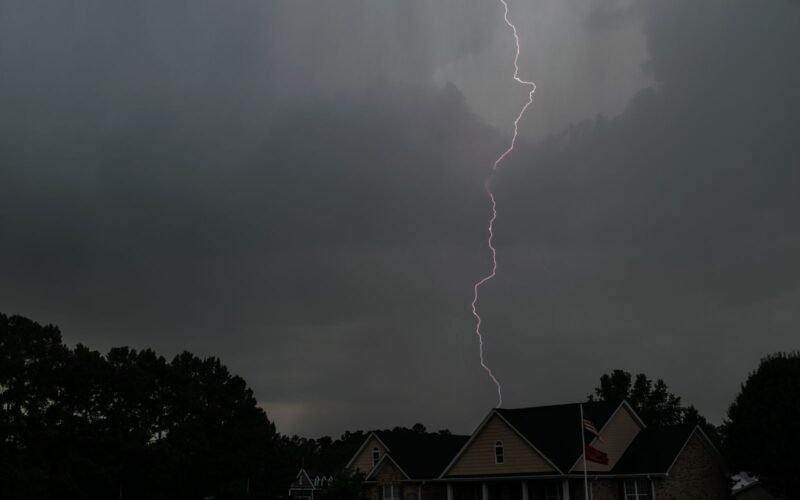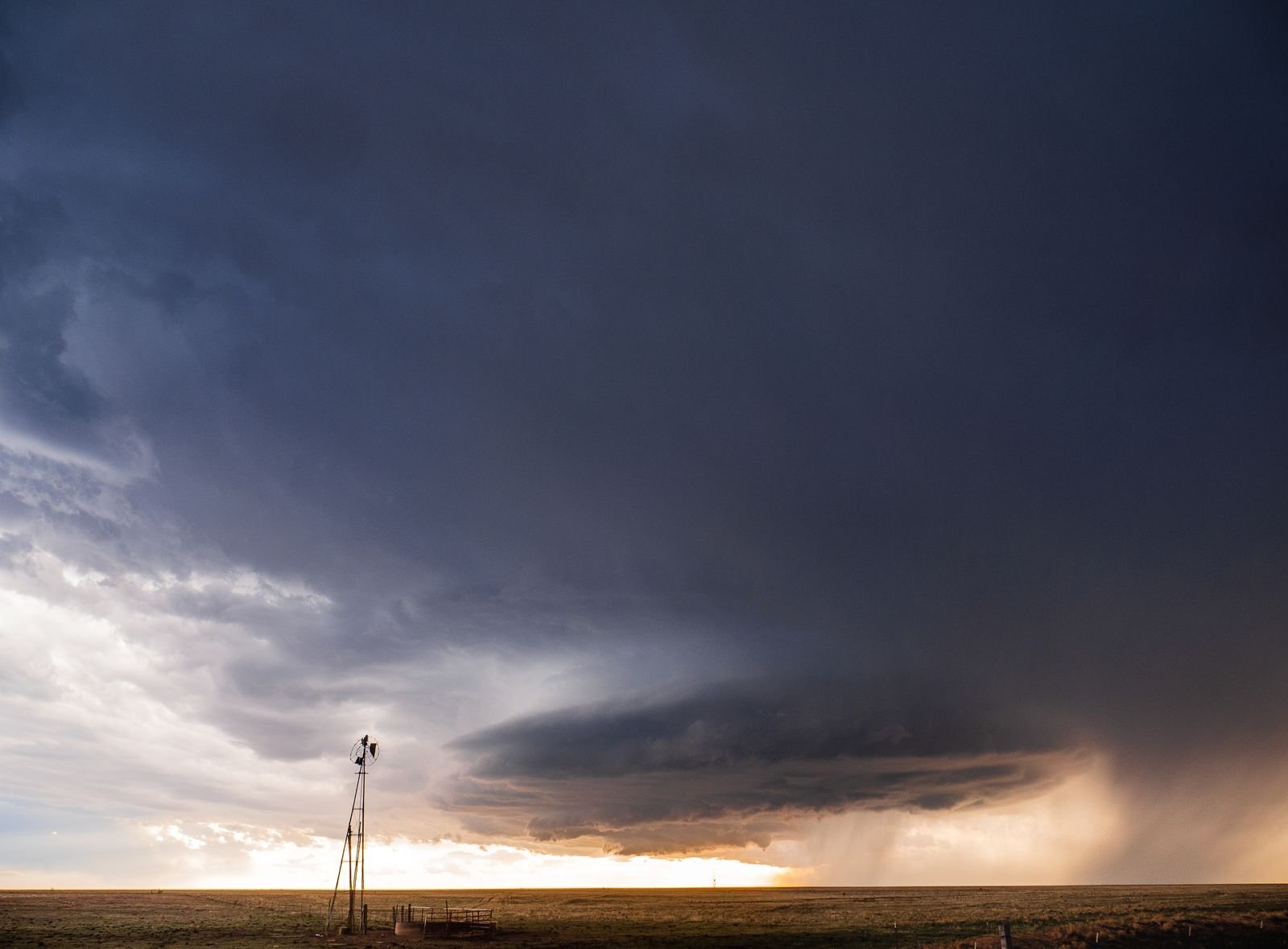
Water damage risks during Texas storm season peak twice in Denton County: a spring stretch from March through June with hail, wind and heavy rain, and a second rainy peak in October. But every month brings some kind of water risk here, from AC overflows in August to frozen pipes in February. Knowing what is coming helps you check the right things at the right time.
This month by month guide uses National Weather Service climate normals for DFW (1991 to 2020) and local storm report history for the Denton area.
Texas storm season at a glance
| Month | Normal rain at DFW | Main water damage risks |
|---|---|---|
| January | 2.53 in | Hard freezes, frozen pipes |
| February | 2.76 in | Frozen pipes, ice storms (Uri was February 2021) |
| March | 3.30 in | First hail storms, wind |
| April | 3.22 in | Peak hail, supercells, roof damage |
| May | 4.78 in | Wettest month, flash floods, hail |
| June | 3.70 in | Late severe storms, wind, heavy rain |
| July | 2.08 in | AC condensate overflows, pop-up storms |
| August | 2.18 in | Peak heat, AC failures, fast mold growth |
| September | 2.72 in | Rain returns, occasional hail |
| October | 4.37 in | Second wettest month, flash floods |
| November | 2.53 in | Fall fronts, first freezes |
| December | 2.84 in | Freezes, holiday travel leaks |
Spring: March to June
This is the main event. Storm report data for the Denton area since 2004 shows April with the most hail reports (55), May next (47), then March (28) and June (18). Recent storms nearby include 2.75 inch hail in Bartonville on March 14, 2024, 2.5 inch hail near Argyle on April 1, 2024, and 1 inch hail in Lake Dallas on June 8, 2025.
- MarchStorm season starts. Clean gutters, check the roof for winter damage, and make sure you know where your main water shutoff is. If you plan to buy flood insurance, do it now: NFIP policies generally have a 30-day waiting period.
- AprilPeak hail month. After any hail, check the attic with a flashlight within a few days and again after the next heavy rain. Photograph roof and yard damage for your claim.
- MayThe wettest month on average, and the month of the record: 16.96 inches at DFW in May 2015. Watch low water crossings, keep downspouts pointed away from the slab, and avoid driving through flooded roads.
- JuneSevere storms taper off but can still bring damaging wind and hail. Heat builds, so any water that got in during spring storms will grow mold faster if it is not dried.
Hail damage often leaks weeks after the storm. For the full story on how hail, wind-driven rain and runoff get into homes, read why North Texas storms cause severe water damage. Homeowners around the lake can find local details on our Lake Dallas water damage restoration page.

Summer: July and August
Rain drops off in midsummer, but water damage calls do not. The normal high at DFW is about 95 to 96 degrees in July and August, and DFW averages about 20 days a year at 100 degrees or more, most of them in these two months.
- JulyYour AC runs nearly nonstop and sends a lot of water down the condensate line. Pour a cup of vinegar down the line or have it flushed, and check that the drain pan and float switch work.
- AugustHottest month. If the AC fails, indoor humidity climbs quickly and any wet material can grow mold within 24 to 48 hours. Pop-up thunderstorms can still cause local street flooding.
After any summer leak, keep the AC running at 72 degrees or lower unless it is the source of the problem. The EPA recommends keeping indoor humidity below 60 percent, ideally 30 to 50 percent, to limit mold.
Fall: September to November
Many people forget about the second rainy season. October averages 4.37 inches at DFW, second only to May, and October 2018 brought 15.66 inches. Fall storms can dump heavy rain on ground that is dry and cracked from summer, which sends water racing toward creeks and foundations.
- SeptemberRain returns. Hail is less common but possible, like the 1.25 inch hail in Sanger on September 21, 2025. Clean gutters after summer.
- OctoberSecond peak for flash floods. Know which roads near you flood, and check that yard drains and grading move water away from the house.
- NovemberCold fronts bring the first freezes of the season. Disconnect hoses and cover outdoor faucets and the sprinkler backflow preventer.
Winter: December to February
Winter is not storm season in the usual sense, but it is pipe season. DFW’s January normal low is about 36 degrees, so most nights stay above freezing, and many homes are not built for long freezes. When an arctic front stalls, pipes in attics, garages and exterior walls are at risk.
- DecemberIf you travel for the holidays, keep the heat on and consider shutting off the main water valve while you are away.
- JanuaryWatch the forecast for multi-day freezes. Open cabinet doors on exterior walls and drip at-risk faucets.
- FebruaryThe month of Winter Storm Uri in 2021, when DFW spent 139 straight hours below freezing. Know how to shut off your water fast, and check for leaks during the thaw.
Storm season and your insurance claim
Storm claims pile up fast after a big hail day, so small steps early make a real difference. The Texas Department of Insurance gives homeowners three practical rules after storm damage: take pictures of the damage before doing any work, make temporary repairs right away to prevent more damage, and hold off on permanent repairs until you have talked with your insurance company.
Temporary repairs include tarping a roof, boarding a broken window, and extracting and drying water inside. Keep receipts for all of it. If your mortgage company is named on the claim check, TDI notes that it must contact you within 10 days of getting the check and has 10 days to send you the money once conditions are met, so ask your lender early how it handles repair funds.
Many Texas policies carry a separate wind and hail deductible, often a percentage of your dwelling coverage. Read your declarations page in March, before the season starts, so the number is not a surprise. If you have questions about a claim, TDI’s consumer help line is 800-252-3439.
Our crews document every job with photos, moisture readings and daily drying logs, and we can work directly with your insurance company and meet the adjuster on site.
Year-round preparation checklist
- Know your shutoffs. Main water valve, water heater valve and the breaker panel.
- Keep photos of your home and belongings. A quick video walk-through each spring makes any claim easier.
- Read your policy before storm season. Check your wind and hail deductible, whether you have flood coverage, and whether sewer backup is endorsed.
- Clean gutters in March and October. Clogged gutters overflow against the fascia and foundation.
- Service the AC in spring. Include the condensate line and drain pan.
- Keep a basic kit. Tarp, flashlight, towels, a wet vacuum and a phone number for emergency water removal.
When storm water gets inside
Storm damage usually needs two steps quickly: stop more water from getting in, then dry what is wet. Our storm damage restoration crews handle tarping, board-up, extraction and structural drying. If rising water from outside came in, our flood water restoration service handles Category 3 cleanup, flood cuts and sanitizing.
Not sure how urgent it is? Our emergency severity calculator asks about the water source, how much is wet, whether water is still flowing, and whether the ceiling or electrical is involved, then gives a severity level with next steps.
Frequently asked questions
When is storm season in North Texas?
The main severe weather season runs from March through June, with April and May the most active for hail. October is a second peak for heavy rain and flash flooding.
What is the wettest month in the Denton and DFW area?
May, with a 1991 to 2020 normal of 4.78 inches at DFW. October is second at 4.37 inches.
When should I buy flood insurance before storm season?
Because NFIP policies generally have a 30-day waiting period, buying in March or early April means coverage is in place before May, the wettest month.
Can hail damage from spring show up in the fall?
Yes. Bruised shingles can hold for months and then leak during fall rains. Check your attic after big rain events, not just after the hailstorm itself.
What water damage is most common in summer?
AC condensate line clogs and drain pan overflows, especially with attic air handlers. Water heater and supply line failures also continue year round.
Whatever the season, if water gets into your Denton County home, call (940) 274-9880. A dispatcher answers 24/7, and we aim to have a crew on site in about 60 minutes in most of the county.