Containment, HEPA, and source removal · Denton County
Mold Remediation in Denton, TX
Mold remediation in Denton TX means physically removing mold growth under containment, cleaning the area with HEPA filtration, and fixing the moisture that caused it, following IICRC S520 and Texas mold rules. Spraying a chemical over mold is not remediation. Removing it and drying the source is.
- IICRC S520 methods
- Containment and negative air
- HEPA air scrubbers
- Works with licensed assessors
Texas mold rules at a glance
- 25 sq ft or more: licensed assessment and remediation apply
- Separate companies: the assessor cannot also remediate the same project
- Clearance: post-remediation assessment by a licensed consultant
- Paperwork: Certificate of Mold Damage Remediation within 10 days
Source: Texas Department of Licensing and Regulation (TDLR).
What mold remediation is, and what it is not
Mold is everywhere outdoors, and some spores are always in indoor air. The IICRC S520 standard calls that normal background Condition 1. The problem is Condition 3: actual mold growth on building materials, which happens when something stays wet. Condition 2 is the in-between, where an area is contaminated with settled spores or fragments from nearby growth.
Remediation aims to bring affected areas back to Condition 1. That means removing the growth itself and the contaminated dust around it, not just killing it. Dead mold can still cause allergic reactions, which is why S520 and the EPA both focus on physical removal. The EPA says biocides like bleach are not routinely recommended, and that porous items like ceiling tiles and carpet may need to be thrown away if they become moldy.
And no mold remediation lasts if the moisture problem remains. The EPA puts it simply: the key to mold control is moisture control.
When you need it
Signs you need mold remediation
Visible growth
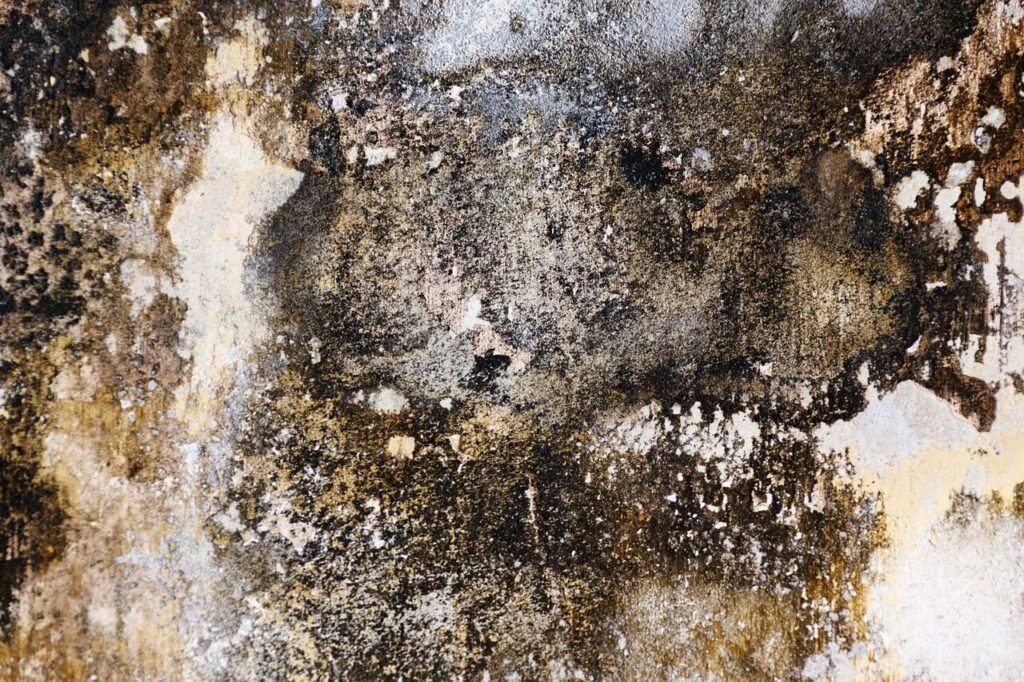
Black, green, gray, or white spots or fuzz on walls, ceilings, baseboards, or inside cabinets.
Musty odor
An earthy smell that is stronger in one room, closet, or when the AC kicks on.
Past water
A leak, flood, or roof problem that was not professionally dried, especially one that sat for days.
Hidden clues
Peeling paint, warped trim, stained ceilings, or condensation that keeps coming back on windows and vents.
Texas law
Mold under vs over 25 square feet in Texas
The Texas Department of Licensing and Regulation (TDLR) sets the rules for mold assessment and remediation.
| Less than 25 contiguous sq ft | 25 contiguous sq ft or more | |
|---|---|---|
| Who may clean it up | Anyone; licensing not required | A TDLR-licensed mold remediation contractor (homeowners working on their own home are exempt) |
| Assessment | Optional | A licensed mold assessment consultant writes a protocol: what to remove, where, how, and the clearance criteria |
| Conflict of interest rule | Not applicable | The assessor and remediator must be different, independent licensees on the same project |
| Notice to the state | Not required | Remediator notifies TDLR before starting; in an emergency, by the next working day |
| Clearance | Visual check; no formal clearance | Post-remediation assessment by the licensed consultant, with a passed clearance report |
| Paperwork you get | Invoice and photos | Certificate of Mold Damage Remediation, issued within 10 days after the project ends |
The certificate matters later. Under Texas law, an insurer may not make an adverse underwriting decision on a home policy based on previous mold damage when the rules were followed and a certificate was issued. If you sell the home, you give the buyer copies of certificates from the past 5 years. Read the TDLR mold FAQ for the details.
The EPA uses a different, smaller rule of thumb for doing it yourself: about 10 square feet, roughly a 3 foot by 3 foot patch. Above that, it recommends professional help.
Right now
What to do if you find mold
- Don’t disturb it. Scrubbing, scraping, or dry-brushing sends spores through the house.
- Don’t spray bleach on drywall or wood. It does not remove growth from porous materials, and the water in it can feed regrowth.
- Turn off fans that blow across the area, and close the door to the room if you can.
- Find the water. Look above and behind the growth for a leak, condensation, or past water event.
- Photograph it for your records and any insurance claim.
- Call for an inspection if the area is large, hidden, or keeps coming back.
Our process
Our mold remediation process
Inspect and plan
We measure the affected area, find the moisture source with meters and thermal imaging, and review the assessor’s protocol when the project is 25 sq ft or larger.
Contain
Plastic sheeting walls and zipper doors seal the work area. HVAC vents are covered. A negative air machine with HEPA filtration keeps the area under negative pressure so spores flow in, not out.
Remove
Moldy drywall, insulation, carpet, and trim are cut out, bagged inside containment, and removed. Framing and other solid materials are cleaned by sanding, wire brushing, or other physical methods.
HEPA clean
Every surface in containment is HEPA vacuumed and damp wiped. HEPA air scrubbers run throughout to capture airborne spores and dust.
Dry and clear
We dry remaining materials, fix or coordinate the fix of the moisture source, and the independent assessor performs clearance before containment comes down and rebuild starts.
Crews wear respirators, disposable suits, and gloves inside containment. Where appropriate, we apply an antimicrobial or sealant to cleaned framing after removal, never as a substitute for it.
Mold testing: when it helps and when it doesn’t
If you can see mold, you usually do not need a test to know you have it. The EPA notes that when visible growth is present, sampling is usually unnecessary. Remediation is the same no matter which species it is, including so-called black mold.
Testing does help in a few cases:
- Hidden growth. A strong musty smell with no visible source.
- Health concerns. When a doctor or household member wants data about the air.
- Clearance. Confirming the area is back to normal after remediation.
- Real estate. Buyers and sellers who need documentation.
In Texas, mold sampling and assessment are generally done by a TDLR-licensed mold assessment consultant or technician. Because the assessor and remediator must be independent on a regulated project, we do not test and then remediate the same job. We can refer you to independent licensed assessors in the area.

What causes mold in Denton County homes and buildings
Mold needs moisture, food (drywall paper, wood, dust), and time. North Texas supplies plenty of all three. Denton summers average highs in the 90s, and spring brings heavy rain and humid stretches. The EPA recommends keeping indoor humidity below 60 percent, ideally 30 to 50 percent. A struggling or oversized AC system can leave a home above that range.
Common causes we see across the county:
- Leaks that were not dried: supply lines, dishwashers, water heaters, and roof leaks from spring hail.
- AC condensation: clogged condensate lines, sweating ducts and vents in hot attics, and overflowing drain pans.
- Bathrooms: weak or missing exhaust fans, failed shower grout, and leaking toilet wax rings.
- Slab and foundation moisture: slab leaks, and poor drainage around foundations on clay soil.
- Flooding and storm water in homes near creeks or low areas.
For more on climate and mold, read how Texas heat increases mold growth. If your mold followed a specific leak or flood, see mold removal after water damage, which covers the water side in more depth.
Mold in attics, HVAC systems, and crawlspaces
Not all mold is on a living room wall. Some of the hardest jobs are in spaces people rarely see.
Attics. Roof leaks after hail, bathroom fans that vent into the attic instead of outside, and sweating ductwork can grow mold on roof decking and framing. Remediation there usually means HEPA vacuuming and physically cleaning the wood, removing wet insulation, and fixing ventilation.
HVAC systems. Air handlers, drain pans, and ducts can grow mold when condensate does not drain or when ducts sweat in hot attics. Because the system moves air through the whole house, contaminated components need cleaning or replacement by qualified HVAC professionals, coordinated with remediation so clean rooms are not recontaminated.
Crawlspaces. Most Denton County homes are built on slabs, but some older homes have pier and beam foundations with crawlspaces. Poor drainage, plumbing leaks, and humid air under the floor can grow mold on joists and subfloor. The fix includes cleaning the wood and controlling moisture with drainage, vapor barriers, or dehumidification.
Mold remediation cost factors and insurance
We do not quote a flat price without seeing the job. Cost depends on:
- Size of the affected area and whether it is over the 25 sq ft Texas threshold.
- Where it is: an open wall costs less than a crawlspace, attic, or HVAC system.
- Materials: drywall and carpet are removed; framing and subfloor are cleaned.
- Containment size and how long equipment runs.
- Assessment and clearance fees from the independent consultant.
- Rebuild after removal.
Our mold growth risk calculator can help you judge how likely growth is after a water event.
On insurance, the Texas Department of Insurance says most home policies will not pay for mold removal except to repair damage caused by a covered risk. So mold after a sudden pipe burst may be part of that claim, while mold from long-term humidity or a slow leak usually is not. Some policies also cap mold coverage. We can work directly with your insurance company when the mold is tied to a covered water loss.
24/7 Emergency Line
Found mold behind a wall or under a sink?
Call (940) 274-9880. We will find the moisture source and give you a free estimate.
Service area
Mold remediation available in every city we serve
- Denton Mold Remediation
- Corinth Mold Remediation
- Lake Dallas Mold Remediation
- Argyle Mold Remediation
- Krum Mold Remediation
- Ponder Mold Remediation
- Little Elm Mold Remediation
- Lewisville Mold Remediation
- Flower Mound Mold Remediation
- Carrollton Mold Remediation
- Coppell Mold Remediation
- Northlake Mold Remediation
- Justin Mold Remediation
Also useful: prevention tips for Texas homeowners.
FAQ
Mold remediation questions
Do I need a licensed company for mold remediation in Texas?
For mold covering 25 contiguous square feet or more, Texas requires a TDLR-licensed remediation contractor, plus a separate licensed assessor. Homeowners working on their own home are exempt, and smaller areas can be cleaned without a license.
Why can’t the same company test and remediate?
Texas rules prohibit one licensee from doing both assessment and remediation on the same project. It prevents a company from finding more mold than exists so it can sell more removal.
What is a Certificate of Mold Damage Remediation?
It is a TDLR form the licensed remediator issues within 10 days after a regulated project ends, showing the mold was remediated and cleared. It helps protect you with insurers and is shared with buyers if you sell.
Is black mold more dangerous than other mold?
Color does not tell you the species or the risk. All indoor mold growth should be removed the same way, with containment and HEPA cleaning. Testing is rarely needed just to name the species.
How long does mold remediation take?
Small, contained jobs often take 1 to 3 days. Larger projects with assessment, containment, removal, drying, and clearance can take a week or more before rebuild starts.
Will the mold come back?
Mold returns when moisture returns. Remediation removes the growth; fixing leaks, drainage, and humidity keeps it from coming back. No honest company can promise mold will never return.
Can I stay home during mold remediation?
Usually, yes. Containment and negative air keep the work area separate. People with asthma, allergies, or weak immune systems may want to stay elsewhere during removal.