Containment and HEPA cleanup · Corinth, TX
Mold Remediation in Corinth, TX
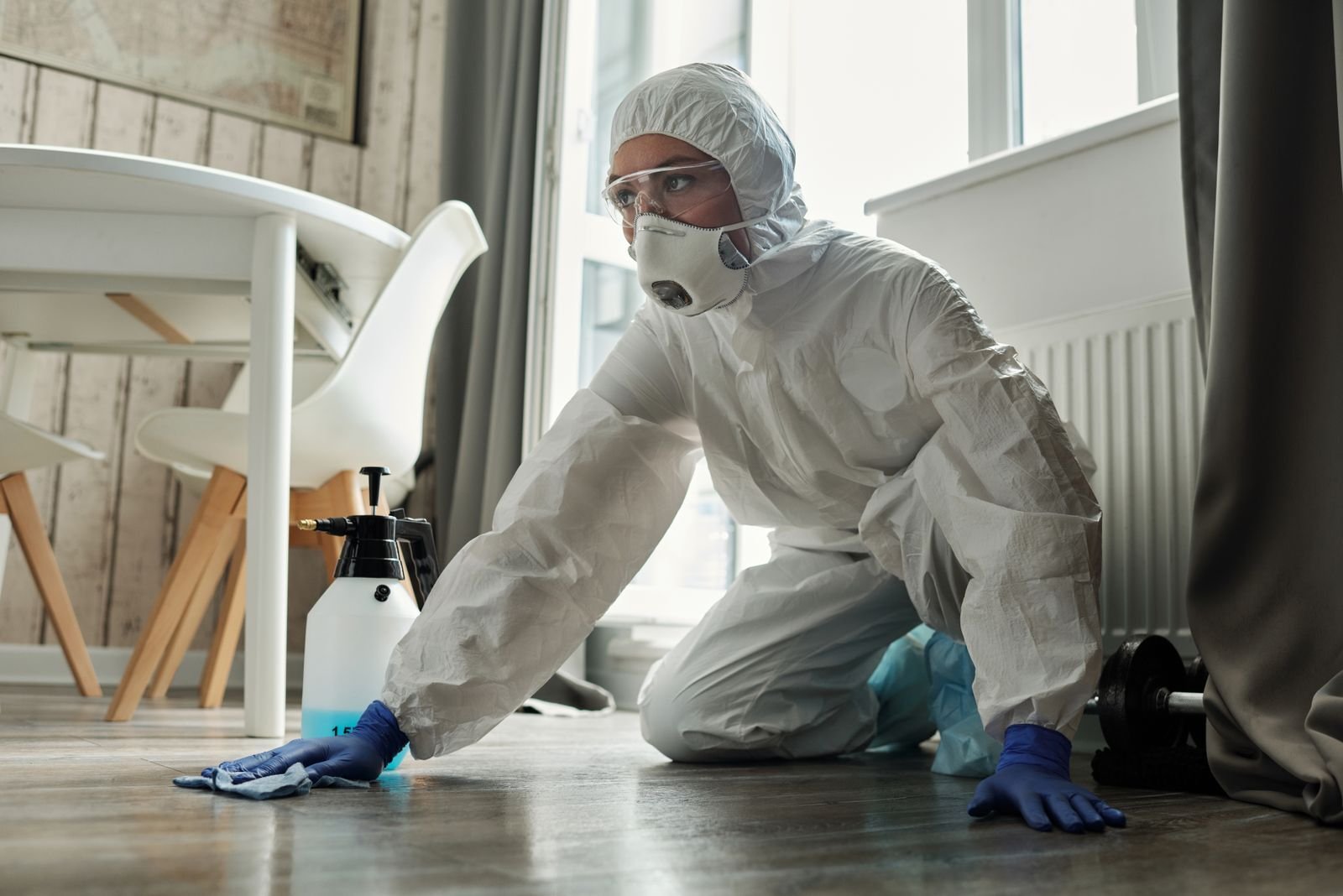
Mold needs moisture, and it spreads spores when disturbed. Our mold remediation in Corinth, TX seals off the area, removes the growth under negative air, and fixes the moisture that fed it, following IICRC S520.
- Containment barriers
- Negative air and HEPA
- Moisture source fixed
- Clearance ready
Mold quick facts
- Growth starts: 24 to 48 hours after wetting
- Standard: IICRC S520
- Texas rules: state licensing for larger jobs
- Service area: all of 76208 and 76210
Bleach does not fix mold in drywall or wood.
Where mold turns up in Corinth houses
Indoor mold in a Corinth house almost always traces back to a water problem that stayed hidden. The usual suspects are an attic AC pan that overflowed, a slow leak behind a shower, a roof leak after hail, or a slab leak under flooring.
North Texas summers add to it. Long stretches of heat and humid air make attics and closed rooms slow to dry. Many local homes from the 1990s and 2000s growth years have also reached the age when shower pans, window seals, and roof decking start to fail. Corinth grew from 3,944 people in 1990 to 19,935 in 2010, so a lot of houses are hitting that point together.
Storms feed attic mold too. Half-dollar hail was reported in Corinth on May 28, 2024. A small roof leak from a storm like that can wet insulation for weeks before a ceiling spot appears.
You might notice a musty smell in one room, dark spots on drywall or baseboards, or peeling paint near a bathroom. Allergy-type symptoms that ease when you leave the house can be another hint. Mold remediation in Corinth TX starts with finding the water, then the growth.
How we work
Our mold remediation process
Inspect
Visual check, moisture readings, and thermal imaging to find the source and the full extent.
Contain
Plastic barriers and negative air machines keep spores from reaching clean rooms.
Remove
Moldy drywall, insulation, and carpet are cut out and bagged inside the containment.
Clean
HEPA vacuuming, wiping, and antimicrobial on framing and surfaces that stay.
Dry and verify
Dry the area, run HEPA air scrubbers, and prepare for post-remediation clearance.
Texas mold rules in plain terms
Texas regulates mold assessment and remediation through the Texas Department of Licensing and Regulation. In general, projects covering 25 contiguous square feet or more fall under state rules, with a licensed assessor writing a protocol and a licensed remediator doing the work. Some exemptions apply, such as owners working on their own homes.
For small areas, a proper cleanup still follows the same ideas: contain, remove, clean, dry. We will tell you up front which path your project fits.
Painting over mold or spraying bleach on drywall hides the problem. Roots in porous material survive, and the stain returns.
Cost and insurance
What affects the price of mold remediation
Size of the area
A small patch under a sink is a short job. Growth across an attic or several walls needs more containment and labor.
What it is growing on
Hard surfaces can be cleaned. Drywall, insulation, and carpet usually have to be removed.
Access
Attics, crawl spaces, and areas behind cabinets take more time to reach and contain.
Insurance
Policies often cover mold only when it came from a covered, sudden water loss. Many have mold limits. Long-term leaks are usually excluded.
To see how fast mold could grow in your conditions, try the mold growth risk calculator. For heat and humidity, read how Texas heat increases mold growth.
Why Corinth homeowners call us for mold
- We fix the water first. As a water damage company, we find and dry the moisture source so the mold has no reason to return.
- We follow IICRC S520. Containment, negative air, and HEPA filtration on every job.
- We rebuild. After clearance, we replace drywall, insulation, and flooring.
- We are nearby. Our Denton team covers Corinth, Lake Dallas, and Hickory Creek.
When a small mold spot is a DIY job, and when it is not
A few square inches of mold on a bathroom tile or window frame can usually be cleaned with detergent and water. Call a professional when any of these are true:
- The growth covers more than a few square feet.
- It is on drywall, insulation, or wood that got wet from a leak.
- You smell mold but cannot find it.
- It came back after you cleaned it.
- Someone in the home has asthma or a weak immune system.
More in Corinth
Other services we offer in Corinth



Read about mold remediation in general or return to our Corinth restoration overview. We also do mold remediation in Lake Dallas, Denton, and Lewisville.
FAQ
Mold remediation questions from Corinth
Do I need a mold test before remediation?
Not always. Visible growth tied to a known leak can be treated without testing. Testing helps when you smell mold but cannot see it, or when you need clearance documentation for a sale or claim.
Is black mold more dangerous than other mold?
Color does not tell you the species or the risk. Any mold growing indoors should be removed the same careful way, with containment and HEPA filtration.
Can I stay home during mold remediation?
For small, contained jobs, usually yes. People with asthma, allergies, or weak immune systems may want to stay away until the work is done.
Will mold come back after remediation?
It can if the moisture source is not fixed. That is why we find and dry the water problem before and during the removal.
How long does mold remediation take?
Small areas take a day or two. Larger jobs with removal and drying can run several days, plus time for clearance and rebuild.