Extraction and drying · Lewisville, TX
Water Mitigation in Lewisville, TX
Water mitigation in Lewisville, TX is the emergency part of a water loss: stop it, extract it, and dry the structure before it rots, warps, or grows mold. Our crews bring extractors and dehumidifiers on the first trip.
- 24/7 water extraction
- LGR dehumidifiers
- Daily moisture logs
- Adjuster-ready reports
Mitigation vs. restoration: what is the difference?
Mitigation limits the damage. Restoration puts the house back. Insurance companies treat them as separate phases, and most policies require you to take reasonable steps to prevent more damage. Fast mitigation is how you meet that duty.
In practice, mitigation means water extraction, removing materials that cannot be dried, setting drying equipment, and checking progress every day. Restoration comes after: drywall, paint, cabinets, and flooring. We do both, so the crew that dried your walls also rebuilds them.
Why speed matters more by the lake
Lewisville sits beside a lake of nearly 30,000 acres. On humid summer days, indoor air near the shoreline can stay damp, which slows natural drying and gives mold a head start. Box fans and an open window will not dry a wall cavity in that air. Commercial dehumidifiers pull the moisture out of the room so wet materials can release theirs.
Timeline
What water mitigation looks like hour by hour
- CallA live dispatcher answers, walks you to the shutoff, and sends the nearest crew.
- First hour on siteSafety check, photos, moisture readings, and a thermal scan to find where water spread.
- Hours 1 to 3Water extraction with truck-mount or portable units. Wet pad, baseboards, and soaked drywall come out.
- Hours 3 to 4Air movers, LGR dehumidifiers, and sometimes wall cavity drying systems go in. We set a drying goal for each material.
- Days 1 to 5Daily visits to take readings, move equipment, and log progress until everything reaches dry standard.
- Final dayEquipment out, final readings recorded, and your report goes to you and your adjuster.
Drying science
How we size the drying setup
IICRC S500 sorts water losses by how much moisture the room has to give up.
| Class | What got wet | What it means for drying |
|---|---|---|
| Class 1 | Part of one room, little carpet or wall | Light setup, often 1 to 3 days |
| Class 2 | Whole room, carpet and walls up to about 2 feet | More air movers and dehumidification |
| Class 3 | Ceilings, walls, insulation, and floors soaked | Heavy dehumidification, often flood cuts |
| Class 4 | Hardwood, plaster, concrete, or subfloor holding water | Specialty drying mats or low-humidity setups, longer timeline |
We also rate the water itself. Category 1 is clean, from a supply line. Category 2 is gray, like washer or dishwasher water. Category 3 is black water from sewage or outside flooding. The higher the category, the more material has to come out.
Water extraction in Lewisville
What we bring to the first visit
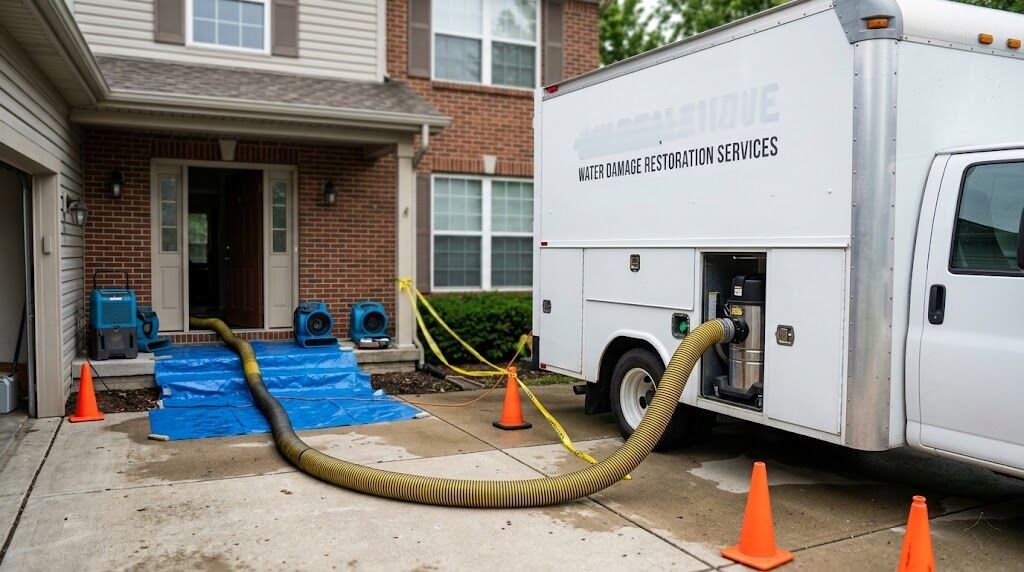
- Extractors. Truck-mount units for big jobs, portables for upstairs apartments and tight spaces.
- Moisture meters and thermal imaging. To find water behind walls and under floors.
- LGR dehumidifiers and air movers. Sized to the room, not guessed.
- HEPA air scrubbers. For gray or black water jobs.
- Antimicrobial. Applied to exposed framing where needed.
Lewisville has a large stock of apartments and townhomes, where water moves between units. Portable gear lets us work on upper floors without running hoses through a building.
Cost factors and insurance
Mitigation is usually billed by the equipment and labor used each day, written up in Xactimate, the pricing software most carriers use. The size of the wet area, the water category, how many days drying takes, and how much material comes out drive the total.
Most homeowners policies cover mitigation for sudden and accidental water damage. Slow leaks and outside floodwater are usually excluded unless you carry flood coverage. Our daily logs show your adjuster exactly what was wet and when it dried. Try the emergency severity calculator if you are unsure how urgent your situation is.
One more point on timing: most policies expect you to act fast to limit damage. Waiting several days to call can give an insurer a reason to question part of the claim, especially if mold starts. A same-day call protects both the house and the claim.
Next steps
Other services we offer in Lewisville
Learn more on our main water mitigation service page or return to the water damage restoration page for Lewisville. We provide the same emergency drying in Coppell, Flower Mound, and Carrollton.
FAQ
Water mitigation and extraction FAQ
Can I just use fans and a shop vac?
For a small, clean spill caught right away, maybe. Once water gets under flooring or into walls, household fans cannot pull it out, and hidden moisture can lead to mold and warped floors weeks later.
Why do you need to come back every day?
Drying is measured, not guessed. Daily readings tell us when to move equipment, when a material is dry, and when to shut down. Those logs also support your insurance claim.
Will the equipment be loud?
Air movers and dehumidifiers make steady noise and add some heat. Most families stay home during drying. We can adjust the setup in bedrooms at night when it is safe to do so.
Do I need to be home while you dry?
Only for the first visit and to let us in for daily checks. You can give us a lockbox code or ask a neighbor to open the door.
Does insurance pay for mitigation even if I do not do repairs?
Often, yes, if the loss is covered. Mitigation is a separate line item. Ask your adjuster how your policy handles it.
What does water extraction in Lewisville cost?
It depends on the wet area, water category, and drying days. We give a free estimate on site, and for covered losses the bill usually goes through your insurance claim minus your deductible.