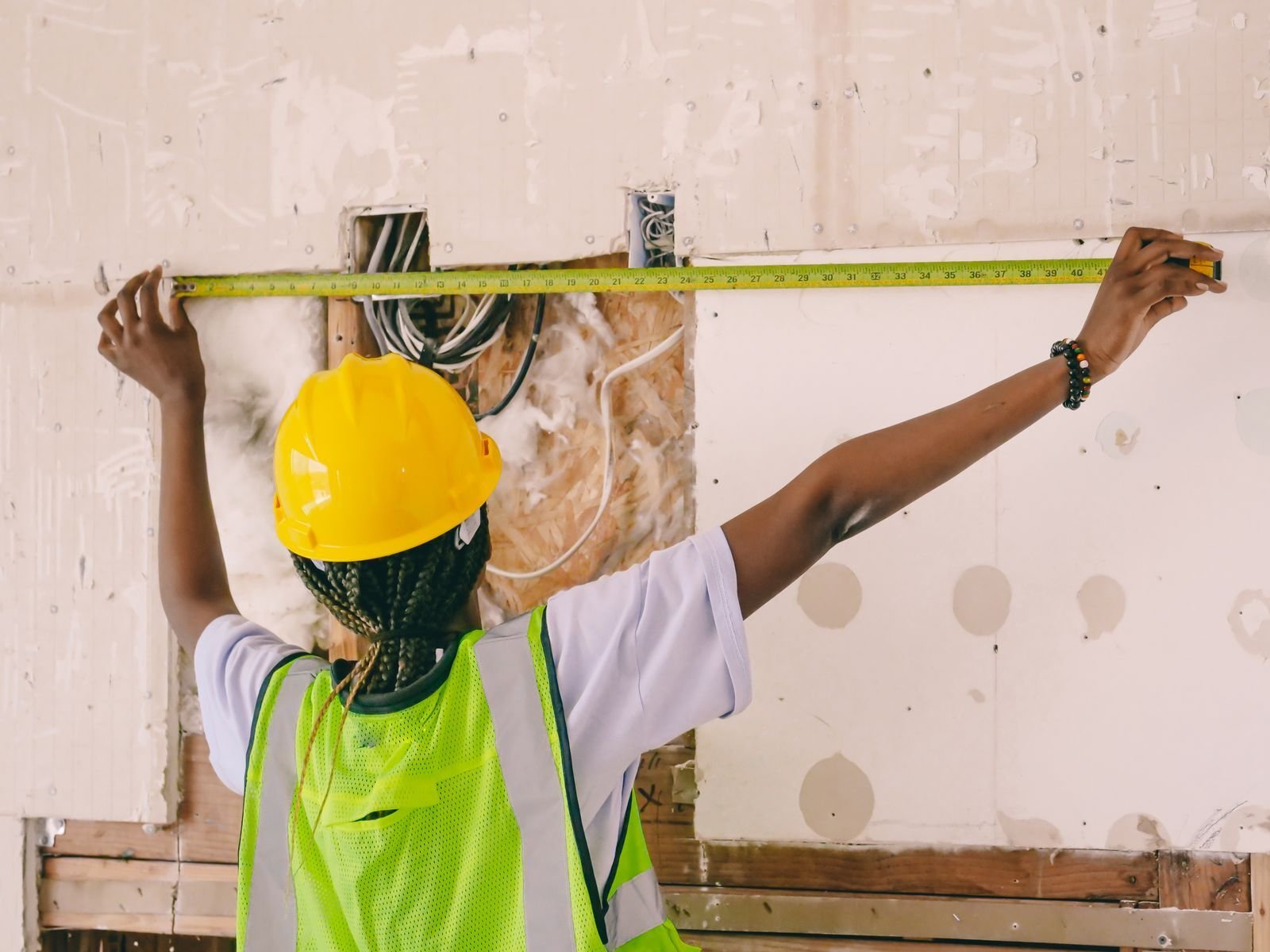
Emergency extraction and drying · Coppell, TX
Water Mitigation in Coppell, TX
Water mitigation is the emergency work that keeps a leak from turning into a rebuild. In Coppell, TX, our crews extract standing water, set up structural drying, and track moisture daily until your home or business reaches dry standard.
- Truck-mount extraction
- LGR dehumidifiers
- Daily moisture logs
- Typical arrival 60 to 90 minutes
Water mitigation Coppell: the goal is speed and proof
Every hour water sits, it wicks higher into drywall and deeper into subfloors. Mitigation is about getting ahead of that: pull the water, remove what cannot be saved, and set up drying that works. It is separate from repairs, and insurers usually treat it as its own line on the claim.
We are coming from Denton, so our typical window for Coppell is 60 to 90 minutes. While we drive, the dispatcher helps you shut off the source and move what you can.
On site
Our water mitigation process
Assess
We find the source, check safety, and classify the water category and damage class.
Map moisture
Pin and pinless meters plus thermal imaging trace water inside walls, cabinets, and slab edges.
Extract
Truck-mount or portable extractors remove water from carpet, pad, and hard floors.
Remove
Wet pad, baseboards, and drywall below the wet line come out only when drying cannot save them.
Dry and verify
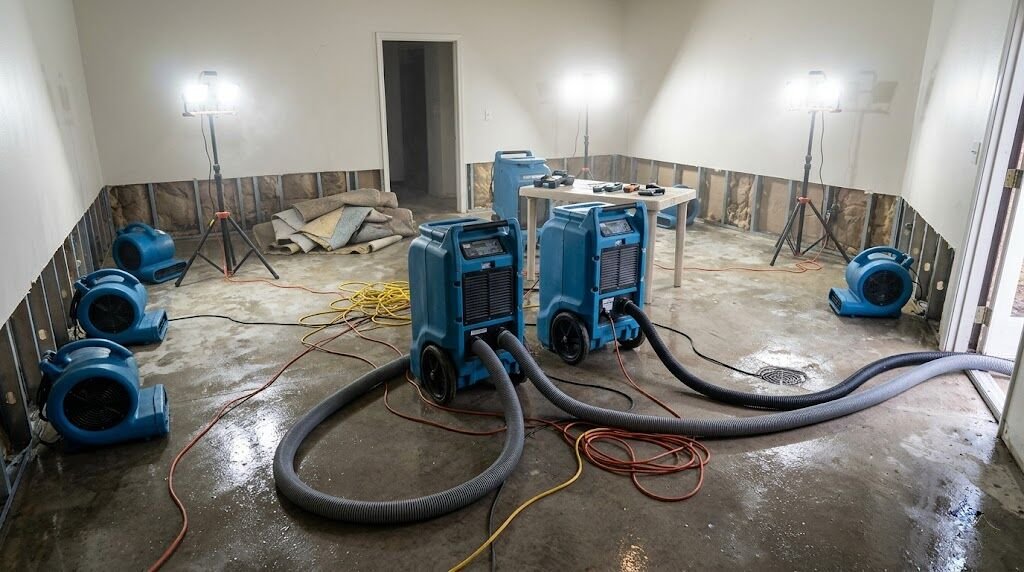
Air movers and dehumidifiers run until readings match dry reference areas.
The science
How structural drying actually works
Fans alone move water around. Drying needs airflow, dry air, and the right temperature together.
| Tool | What it does | Why it matters in Coppell |
|---|---|---|
| Air movers | Push air across wet surfaces to speed evaporation | Helps dry the carpeted rooms common in 1980s and 1990s homes |
| LGR dehumidifiers | Pull water out of the air at low humidity levels | North Texas summers keep indoor air damp without them |
| Thermal camera | Shows cool, wet areas behind drywall | Finds attic drips in two-story homes before they stain |
| Moisture meters | Measure water in wood, drywall, and concrete | Confirms slab edges and subfloors are dry, not just the surface |
| Daily logs | Record temperature, humidity, and readings | Gives your adjuster proof of drying time |
Water classes
Why some jobs dry faster than others
The IICRC sorts water losses into classes by how much evaporation they need.
- Class 1: a small area, little absorbed water. Often dry in a day or two.
- Class 2: a whole room, carpet and walls wet up to about 2 feet.
- Class 3: water from above, soaked ceilings, walls, and insulation.
- Class 4: dense materials like hardwood, plaster, or concrete that hold water.
A leak from an attic air handler in a two-story Coppell home is often Class 3, since it wets the ceiling, insulation, and walls on its way down.
Mitigation details specific to Coppell properties
Most Coppell homes sit on concrete slabs built on clay soil. Slabs hold moisture along the edges and under tack strip, so we read the concrete, not just the carpet, before we call a room dry.
Two-story plans from the 1980s and 1990s put a lot of water above the living space: attic air handlers, upstairs baths, and laundry rooms. Water from above wets more material on the way down, which is why ceiling leaks often need more equipment than a kitchen floor leak.
Sewer backups are a different animal. Coppell sends wastewater to the Trinity River Authority system, and a clog or backup inside your home is Category 3 water. That means protective gear, removal of porous materials, and disinfection before any drying begins.
Mitigation cost and insurance
Mitigation cost depends on the square footage, the water category, the class of loss, and the number of drying days. Starting fast is the most reliable way to keep it down, because less material has to be removed.
Most policies require you to take reasonable steps to prevent more damage, and mitigation is that step. If the cause is covered, mitigation usually is too. We document everything and can work directly with your insurance company. See a rough range with our water damage cost calculator, or gauge urgency with the emergency severity calculator.
Why call us for mitigation in Coppell
IICRC-certified technicians, commercial-grade extraction and drying gear, and a live dispatcher at any hour. When drying is done, the same team can handle the repairs, so there is no gap between mitigation and rebuild.
Also in Coppell
More restoration help in Coppell
Read the full water mitigation service overview or visit our Coppell service area page. We also provide water mitigation in Carrollton, Lewisville, and Flower Mound.
FAQ
Water mitigation questions from Coppell
What is the difference between water mitigation and restoration?
Mitigation stops the damage: extraction, removal of ruined materials, and drying. Restoration repairs what was removed. Insurers often list them separately.
Can I just run fans and a shop vac?
For a tiny spill, maybe. For anything that reached walls or under flooring, fans alone often leave hidden moisture that leads to mold and warping.
Why do you need to come back every day?
We take readings, move equipment where it is needed, and remove it when areas are dry. The daily log is also what your adjuster uses to approve drying time.
How much power does the drying equipment use?
A typical setup runs on standard household outlets spread across circuits. We plan the layout so breakers do not trip.
Do you do water extraction in Coppell businesses too?
Yes. We extract and dry offices, shops, and warehouse space, often after hours to limit disruption.
What if a city water main breaks near my Coppell home?
The City of Coppell handles the main and the line up to your meter. If the water reaches your house or garage, the cleanup inside is on the property owner, and we can start mitigation while the city repairs the street side.