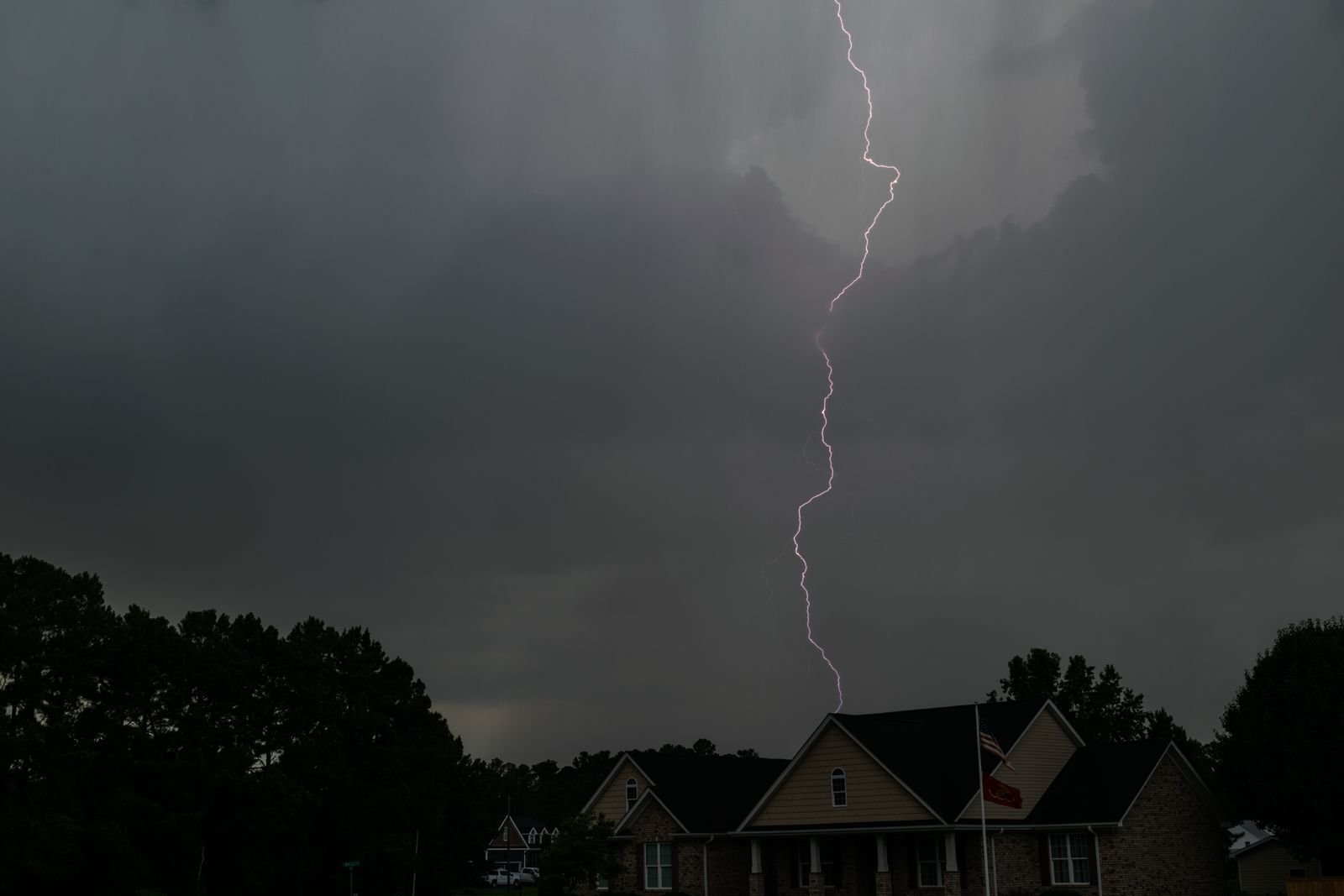
Hail, wind, and heavy rain · Flower Mound, TX
Storm Damage Restoration in Flower Mound, TX
After hail or a wind storm, water often gets in long before the roof is fixed. Our storm damage restoration team in Flower Mound, TX tarps the roof, boards openings, and dries ceilings, attics, and walls before mold sets in.
- Emergency roof tarping
- Board-up after wind damage
- Attic and ceiling drying
- Storm claim photos
Storm season in Flower Mound
Hail reports around Flower Mound cluster from March through May, with June storms close behind. On May 27, 2024, a retired National Weather Service employee measured 2 inch hail in Colleyville, about 10 miles south. Storms like that crack shingles, split skylights, and break windows across whole neighborhoods at once.
The west side of town is growing fast, including the Denton Creek District and Canyon Falls, where Flower Mound meets Argyle and Northlake. Newer roofs still take hail, and large homes have a lot of roof and window area to protect. Older homes from the 1990s building boom may be on their second or third roof by now.
Wind-driven rain is the other half of the story. Strong gusts push water sideways under shingles, through soffit vents, and past window seals that never leak in normal rain. That water often lands on top of attic insulation, where nobody sees it until a ceiling stain appears a week later.
Storm damage restoration in Flower Mound is about speed. A small hole left open through two days of rain can soak attic insulation, stain a ceiling, and start mold on the roof deck.
By season
What North Texas weather does to a house
| Season | Typical threat | How water gets inside |
|---|---|---|
| March to May | Hail, supercells, straight-line winds | Cracked shingles, broken skylights and windows, torn flashing |
| June and early summer | Severe thunderstorms, downbursts | Fallen limbs through roofs, wind-driven rain under siding |
| Fall | Heavy rain events, a second storm peak | Clogged gutters overflowing into soffits and walls |
| Winter | Ice storms and hard freezes | Ice on roofs and gutters, frozen pipes in attics and exterior walls |
After the storm passes
What to do first
- As soon as it is safeStay clear of downed lines. Walk the outside of the house and photograph damage from the ground.
- Within a few hoursCheck ceilings, the attic hatch, and window sills for water. Put buckets under drips and move belongings.
- Same dayCall us at (940) 274-9880 for tarping or board-up, and call your insurer to open a claim.
- Days 1 to 5We dry the attic, ceilings, and walls while you get roof bids. Drying first keeps mold out of the claim.
The service
Our storm damage cleanup process
Protect
Roof tarps and window board-up stop more rain from getting in.
Dry
We remove wet insulation, extract water, and dry ceilings, walls, and floors.
Rebuild
Drywall, paint, and flooring are restored after the roofer finishes.

Storm claims, costs, and HOA notes
Most homeowners policies cover wind and hail damage and the rain that comes in through the opening it created. Many Texas policies carry a separate, often percentage-based, wind and hail deductible, so check yours. Rising surface water from a storm is flood damage and needs a flood policy.
Costs depend on how much of the interior got wet, whether insulation must be replaced, and how long drying takes. Tarping and board-up are billed separately from drying. Our photos, moisture readings, and itemized estimate go straight to your adjuster.
If your street is part of an HOA or a master-planned community such as Canyon Falls, there may be rules on roofing and exterior materials. Interior drying does not need approval, but check before replacing anything visible from the street.
- 24/7 response. Tarping crews go out the night of the storm when it is safe.
- Water experts. Drying is our core work, so hidden attic moisture does not get missed.
- Documented work. Before, during, and after photos for your claim.
Attic drying after hail
Wet blown-in insulation packs down and holds water against the ceiling drywall. We usually remove it, dry the decking and ceiling from above, and replace the insulation once readings are normal. Leaving soggy insulation in place is one of the most common reasons a storm claim turns into a mold claim.
Read more on why North Texas storms cause severe water damage.
Also in Flower Mound
Additional services in Flower Mound






Read our storm damage restoration service page, or return to the Flower Mound water damage page. We also respond after storms in Argyle, Northlake, and Lewisville.
FAQ
Storm damage questions in Flower Mound
Should I wait for the roofer before calling you?
No. Roofers are often booked for weeks after a big hailstorm. We can tarp the roof and dry the inside now, so the water does not keep spreading while you wait.
How do I know if hail let water into my attic?
Look for wet insulation, dark spots on the roof decking, or daylight through the roof. Ceiling stains may take days to show. We check with moisture meters and thermal imaging.
Do you do roof repairs?
We provide emergency tarping and interior restoration. Permanent roof replacement is done by a roofing contractor, and we coordinate with them.
Is a fallen tree through my roof covered?
Often, yes, when it damages the house during a covered storm. Coverage and deductibles vary, so confirm with your carrier and document everything first.
Can you board up broken windows the same night?
Yes, when it is safe to work. Our dispatcher answers 24/7 and sends a crew with plywood and tarps. Boarding up quickly also protects your claim, because insurers expect you to prevent further damage.