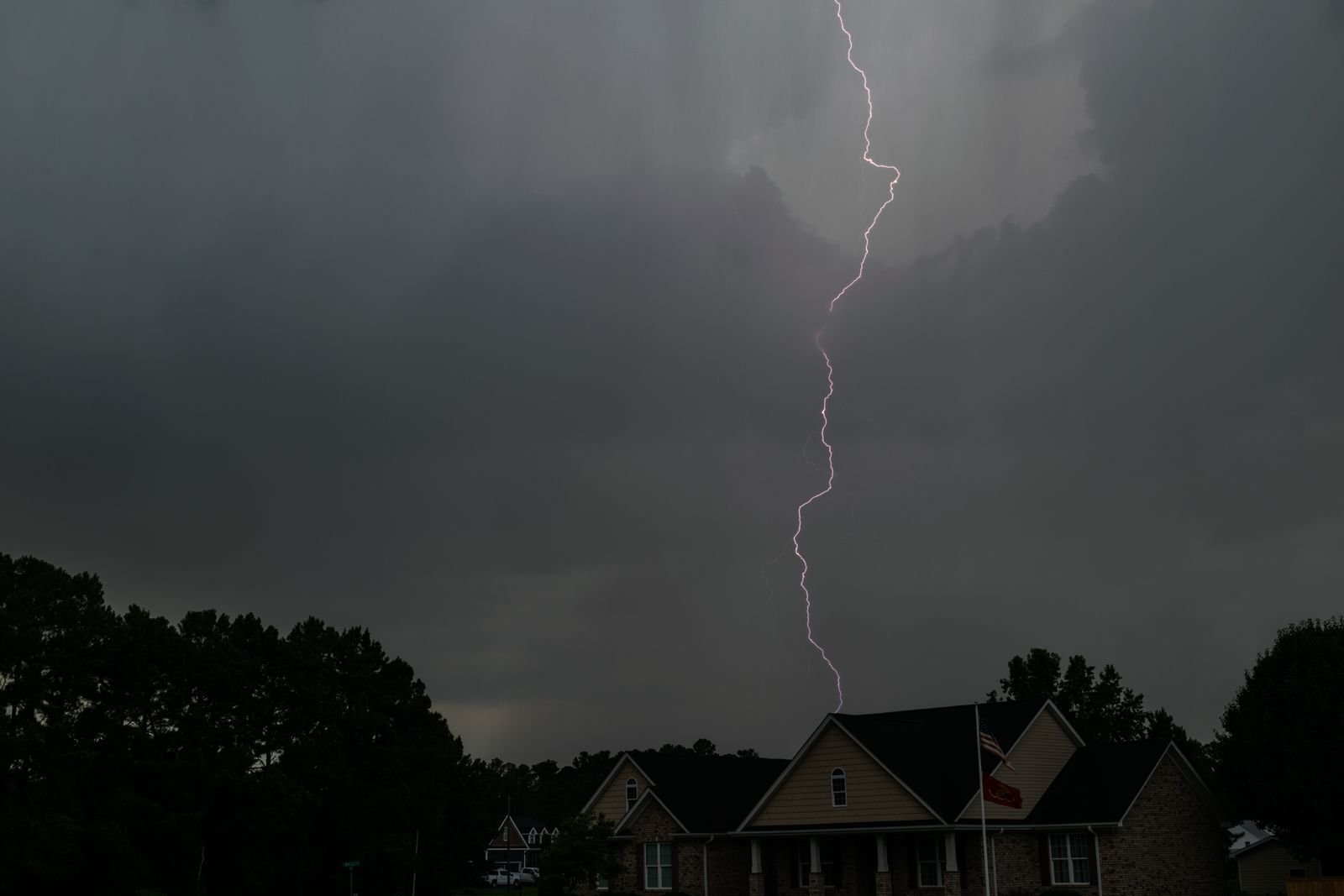
Hail, wind, and heavy rain · Lake Dallas, TX
Storm Damage Restoration in Lake Dallas, TX
When hail or wind opens up your roof, rain is the real threat. Our storm damage restoration in Lake Dallas, TX starts with tarping and board-up to stop more water, then moves to drying ceilings, attics, and walls.
- Emergency roof tarping
- Board-up
- Attic and ceiling drying
- Claim photos
After the storm passes: first steps
Stay inside until lightning is over and check for downed lines before walking the yard. Then work through this list.
- Look up. Stains, drips, or sagging ceiling drywall mean water is in the attic.
- Catch water. Buckets and towels under drips. Poke a small hole at the center of a bulging ceiling stain so water drains in one spot, only if you can do it safely.
- Photograph outside and in. Missing shingles, dented gutters, broken windows, fallen limbs, and every wet room.
- Report the claim. Many carriers want notice quickly after a hail or wind event.
- Call (940) 274-9880. We tarp and start drying the same day when possible.
Storm season
What each season brings to Lake Dallas
North Texas weather has a pattern. Here is what we typically see through the year.
| Season | Typical threat | Common damage |
|---|---|---|
| March to June | Hail, severe thunderstorms, heavy rain | Cracked shingles, broken skylights, roof leaks, runoff into garages |
| Summer | Pop-up storms with strong straight-line wind | Tree limbs on roofs, lifted shingles, wind-driven rain at windows |
| Fall | A second, smaller storm season | Leaks through flashing and old roof penetrations |
| Winter | Hard freezes and ice, as in February 2021 | Frozen pipes, ice on roofs and gutters, attic leaks |
Spring is the peak for hail across Denton County. Our article on why North Texas storms cause so much water damage explains why.
Lakeside exposure
Why wind-driven rain hits lakeside homes hard
Lake Dallas sits on the western shore of Lewisville Lake, where storms can cross open water with little to slow them. Wind pushes rain sideways into window frames, door thresholds, and siding joints that stay dry in a normal shower.
That water often ends up inside the wall cavity, not on the floor. A stain near a window corner or swollen trim below a sill is a common first sign. We use thermal imaging to follow it without tearing out more wall than we need to.
Mature trees near a house add another risk: falling limbs. A limb through the roof needs a tarp and board-up before any drying can start.

Our process
How we handle storm damage
Secure
Emergency roof tarps, window board-up, and debris removal to keep more water out and the house safe.
Dry
We pull wet insulation, open damaged ceiling drywall, and dry the attic, walls, and floors with dehumidifiers and air movers.
Restore
Drywall, texture, paint, and flooring go back once the structure is dry. We coordinate with your roofer on timing.
24/7 Emergency Line
Storm damage in Lake Dallas?
Call (940) 274-9880 for tarping and water removal, day or night.
Storm damage restoration in Lake Dallas TX: cost and claims
Hail and wind damage are usually covered by homeowners policies, and so is rain that enters through that damage. Rising surface water is a separate issue that needs flood coverage. Many Texas policies carry a separate wind and hail deductible, often a percentage of the home’s insured value, so check yours.
Cost depends on the size of the opening, how much rain came in before it was covered, and which materials got wet. Attic insulation and ceiling drywall are the most common replacements. We keep roof and interior photos together so the adjuster sees the full link from cause to damage.
Timing matters on storm claims. Water that sits in an attic for a week while you wait for a roofer can turn a ceiling repair into a mold job, and some carriers push back on damage they see as preventable. A tarp and a moisture check in the first day or two protect both the house and the claim.
Roof replacement is the roofer’s job. Some roofing and structural repairs may need a permit from Lake Dallas Development Services, and your contractor will know.
Why call us after a storm
- Tarping and drying in one visit when conditions allow.
- Claim-ready photos of both the entry point and interior damage.
- Crews up I-35E in Denton, not across the metro.
- Repairs included after drying.
More services
Other restoration services in Lake Dallas






Read about our storm damage restoration service or visit the Lake Dallas restoration page. Storm cleanup is available nearby in Corinth, Little Elm, and Denton, plus Shady Shores and Hickory Creek.
FAQ
Storm damage questions
Do you replace roofs?
No. We tarp to stop water, then dry and repair the inside of the home. A licensed roofer handles the roof itself, and we can work around their schedule.
How soon should I report hail damage to insurance?
As soon as you can. Policies require prompt notice, and hail marks are easier to document before the next storm adds more.
Is a small ceiling stain after a storm a big deal?
It can be. A small stain often means wet insulation and decking above it. Left alone, that area can grow mold or weaken the ceiling drywall.
What if a tree limb came through the roof?
Stay out of that room. We can remove the limb from inside, tarp the opening, and start drying. A tree service may be needed for anything still hanging on the roof or leaning on the house.
Do storms knock out power and stop the drying?
Sometimes. If power is out, we can bring equipment sized for a generator or return to set up once service is restored. We track readings either way so the adjuster sees the full timeline.
Can you board up broken windows at night?
Yes. Our line is answered 24/7, and board-up is part of emergency storm response.