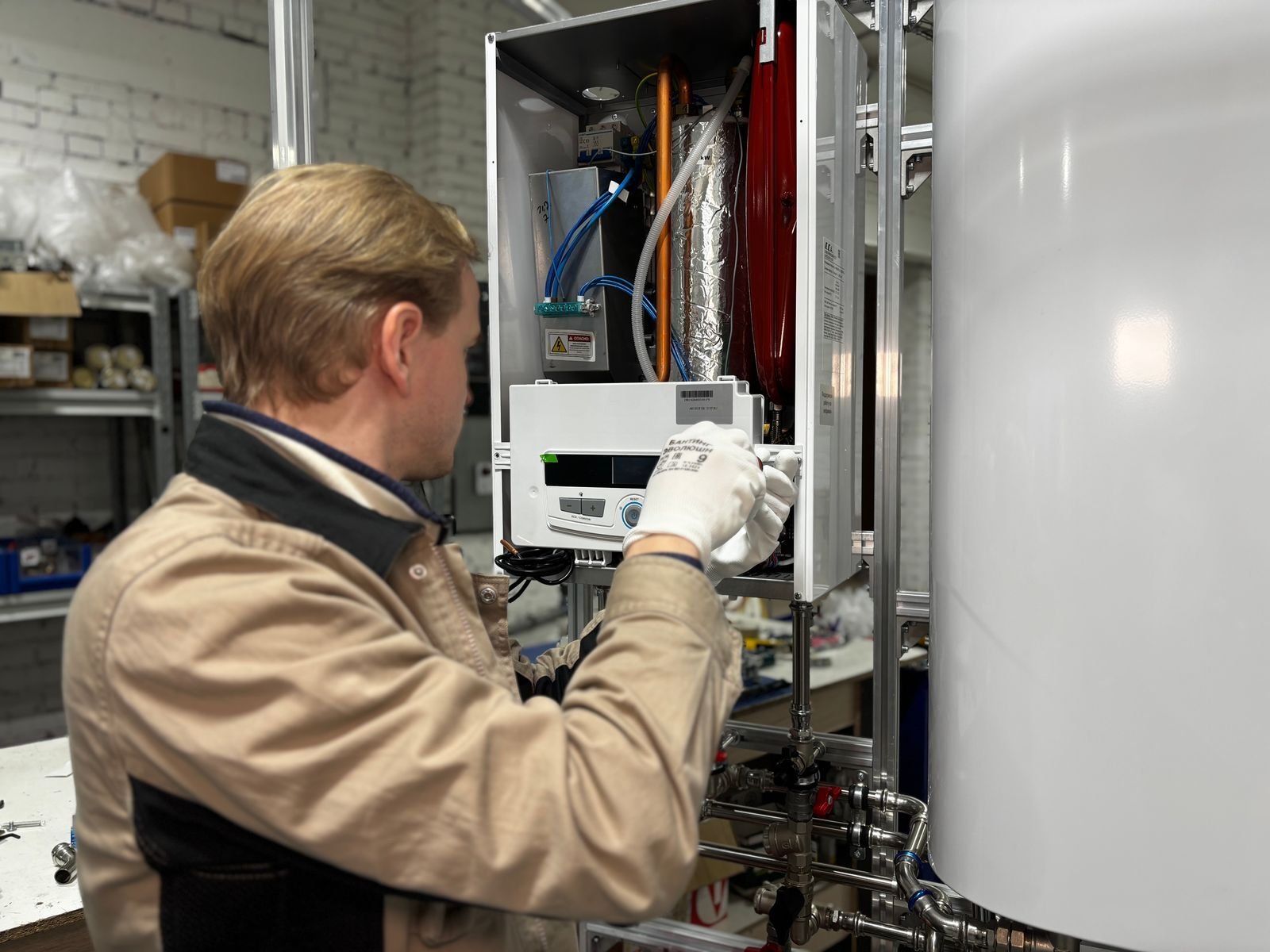
Water heaters, washers, fridges, AC lines · Argyle, TX
Appliance Leak Restoration in Argyle, TX
Appliance leak restoration in Argyle, TX starts with finding where the water went, which is often far from the appliance. We dry ceilings under attic water heaters, cabinets under dishwashers, and floors behind washers.
- Hidden moisture found
- Cabinet and ceiling drying
- Insurance photos and logs
- Answered 24/7
Leak from an appliance? Start here
Turn off the valve behind or under the appliance. For a water heater, close the cold inlet on top and switch off the gas or the breaker. Unplug electric appliances only if the outlet and floor are dry. Then photograph the leak and call us at (940) 274-9880.
Most appliance leaks are clean water at first. If water sits for a day or two, or comes from a dishwasher or washer drain, it can turn into Category 2 water. That means more cleaning and a higher chance that pad and cabinet bottoms must be replaced.
Never put your hands near a leaking gas water heater if you smell gas. Leave the house and call the gas company from outside. In Argyle that may be CoServ or Atmos, depending on your address.
Where the water goes
Common appliance leaks in Argyle homes
About half of Argyle’s homes were built in 2000 or later, and many put major equipment upstairs or in the attic.
| Appliance | Typical spot in local homes | How it fails | Where the damage hides |
|---|---|---|---|
| Water heater | Attic in many newer builds, garage in older ones | Tank rust-through, relief valve discharge, full drain pan | Ceiling drywall, attic insulation, walls below |
| AC air handler | Attic or upstairs closet | Clogged condensate line, rusted drain pan | Ceiling stains, closet walls, hallway carpet |
| Washing machine | Upstairs laundry in many two-stories | Burst supply hose, drain overflow | Floor below, subfloor, rooms next door |
| Dishwasher | Kitchen island or perimeter cabinets | Loose supply line, failed door seal, drain leak | Under cabinets, toe kicks, hardwood near the sink |
| Refrigerator ice maker | Kitchen | Cracked plastic line, loose fitting | Under the fridge, flooring seams, slab |
Our approach
What appliance leak restoration involves
Appliance leaks are sneaky. A slow drip under a dishwasher can soak cabinet bases for weeks before anyone notices. An attic water heater can fill its pan, overflow, and run across the ceiling before a stain shows.
- Trace it. Thermal imaging and meters follow the water under flooring and inside cabinets.
- Open only what we must. We remove toe kicks or drill small holes to dry cabinet voids before tearing anything out.
- Dry from both sides. For attic leaks, we dry insulation and the ceiling from above and below.
- Put it back. Our team repairs drywall, paint, and flooring once readings are dry.
What not to do after an appliance leak
- Do not keep running the appliance to “see if it leaks again.”
- Do not lay towels over wet carpet and walk away. The pad underneath stays soaked.
- Do not push up on a wet, sagging ceiling.
- Do not throw out the failed hose or part before your adjuster sees it.
Simple habits that prevent the next leak
- Check the attic pan. Look at the water heater and air handler drain pans twice a year, and add a pan alarm.
- Flush the AC line. A cup of vinegar down the condensate line each spring helps keep algae out.
- Swap old hoses. Replace rubber washer and ice maker lines with braided ones.
- Know the valves. Make sure everyone in the house can find the shutoff for each appliance.
- Watch the age. Many tank water heaters last about 8 to 12 years. Plan replacement before the tank fails.
If you are away often, consider automatic shutoff valves or small leak sensors near the water heater, washer, and dishwasher. Many connect to your phone and can alert you before a slow drip becomes a ruined ceiling.
Cost, insurance, and permits
Sudden appliance failures, such as a burst washer hose, are often covered by homeowners policies. Damage from a leak that went on for weeks may be denied as long-term. Coverage depends on your policy, so dated photos and moisture readings help. The appliance itself is usually not covered. Estimate your loss with the water damage cost calculator.
If you replace a water heater, the Town of Argyle requires permits for plumbing work, and gas or electrical connections may need one too. Your installer pulls it. Our cleanup and drying do not need a permit.
We aim to reach most Argyle homes in about 60 minutes, we work with every insurance carrier, and our IICRC-certified crews finish the rebuild themselves.
More services
Related help for Argyle homes

Read about our appliance leak restoration service or go to the Argyle area page. The same service is available in Northlake and Corinth.
FAQ
Appliance leak questions
My attic water heater leaked through the ceiling. What gets replaced?
Usually the wet section of ceiling drywall and the soaked insulation above it. Walls and floors below are tested and often can be dried in place if we get there early.
Can you save my kitchen cabinets?
Often, yes. We remove the toe kicks and dry the space under the cabinets with directed air. Particleboard bases that swelled usually need replacing.
What causes AC drain pan overflows?
Algae and debris clog the condensate line, so water backs up into the pan. Summer is the peak season because systems run nonstop.
Should I replace my washer hoses?
Braided stainless hoses last longer than rubber ones. Many plumbers suggest replacing hoses every few years and turning off the valves when you travel.
Do you repair the appliance too?
No. An appliance tech or plumber repairs or replaces the unit. We handle the water damage it caused.